
Choosing the right Folding Door manufacturer in 2026 requires more than comparing catalog prices. Global buyers must examine thermal performance, weather resistance, hardware durability, production consistency, and after-sales support. A beautiful glass wall can still fail when rollers bind, seals shrink, or drainage channels clog after heavy rain.
The International Energy Agency reports that buildings consume about 30% of global final energy. This makes air leakage, glazing performance, and installation quality important purchasing factors. Grand View Research also identifies continued growth in the global doors market through 2030, although market definitions vary between reports. That difference deserves attention.
“Water management is the most important thing,” says Joe Lstiburek, a widely respected building-envelope expert. His statement applies directly to Folding Door selection. Poor water control can damage flooring, insulation, and interior finishes within one season. The best manufacturers therefore publish tested performance data, not only attractive project photographs.
This guide evaluates leading manufacturers for international projects. It considers product engineering, certification practices, customization, lead times, warranty clarity, and installer training. Regional climate matters too. A coastal hotel needs different protection from a dry inland residence. A high-rise balcony needs stronger wind resistance than a private garden room.
Some comparisons remain imperfect. Manufacturers report performance under different test conditions. Prices also change with glass specifications, freight, currency, and local installation costs. Buyers should verify every critical claim through current technical documents and independent testing. That extra step may feel slow. It is usually cheaper than replacing an entire door system.
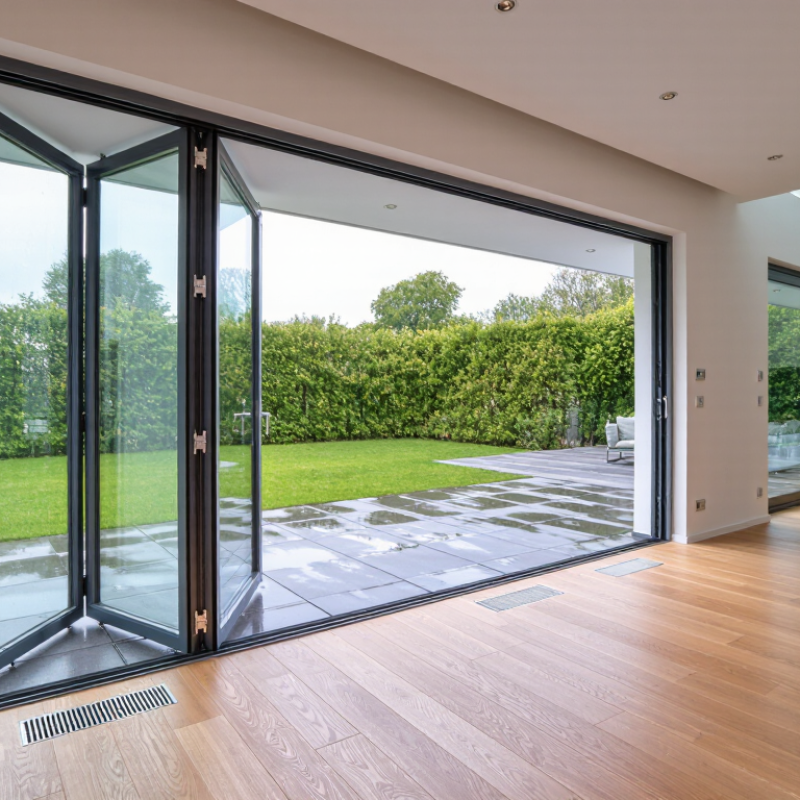
Folding doors use hinged panels that stack beside an opening. They create a wider passage than many sliding systems. A typical set includes panels, hinges, rollers, tracks, handles, and locking points. Panel movement should feel controlled, not loose or jerky. On site, even a small floor-level difference can affect alignment. Measure the finished opening, not the early construction frame.
Material choice shapes daily performance. Aluminium frames resist moisture and suit demanding climates. Timber offers warmth, but it needs regular protective treatment. Glass panels should provide suitable impact resistance, light control, and thermal performance. Look for reliable seals around each panel. Weak seals can invite dust, rain, and uncomfortable drafts. Hardware quality matters too. Rollers must carry the panel weight without excessive noise. Fingersafe gaps and secure locks deserve equal attention.
Global buyers should request drawings, packed dimensions, installation instructions, and verified performance data. Ask how the door handles wind, temperature changes, and repeated opening cycles. Local installers may reveal practical problems that brochures miss. I have seen attractive doors fail because the track had no drainage plan. That detail is easy to overlook. Perfect specifications do not guarantee a good installation. Confirm replacement hardware access, warranty conditions, and technical support before placing an order. Aamma.
Choosing a folding door manufacturer requires more than comparing catalog prices. Examine factory experience, production equipment, and completed projects in similar climates. Ask how many years the company has produced folding systems. Request installation photos, test reports, and customer references. Real evidence is stronger than polished claims.
Review the door’s frame material, hardware grade, glass specification, and drainage design. For coastal projects, confirm corrosion-resistant finishes and suitable fasteners. For cold regions, inspect thermal-break details, gasket quality, and air-sealing methods. Ask whether the system has verified water, wind, and operational performance. Laboratory data matters, but field performance matters too.
Request a physical sample before placing a large order. Operate it repeatedly. Check whether panels align smoothly, locks engage easily, and rollers remain quiet. Clarify tolerances, packaging, replacement parts, delivery schedules, and installation guidance. A reliable manufacturer should explain problems directly, not promise perfection. No checklist is perfect. I once trusted attractive drawings too quickly, and the final hardware felt weaker than expected. That experience made factory audits and sample testing non-negotiable. Also assess communication during technical revisions. Slow replies can become expensive delays. A capable partner provides clear drawings, measurable specifications, inspection records, and practical after-sales support for international buyers.
2026 Best Folding Door Manufacturers for Global Buyers?
Top Folding Door Manufacturers by Product Strengths
The best folding door manufacturer depends on the project, not only the factory price. For wide openings, choose producers with stable aluminum frames, accurate rollers, and tested load capacity. A smooth showroom sample means little if the panels sag after repeated use. Ask for cycle-test results, frame tolerances, and installation drawings.
Manufacturers focused on thermal performance usually offer insulated glass, thermal breaks, weather seals, and drainage channels. These details matter in coastal homes, cold warehouses, and humid commercial spaces. For custom projects, stronger suppliers provide measured shop drawings, color samples, and hardware options before production. Clear revision records show useful discipline.
Some manufacturers stand out through export experience and dependable after-sales support. They should explain packaging methods, replacement-part availability, lead times, and local installation requirements. Check project references, product certifications, and independent test reports where possible. A low quote may hide weak hinges or unsuitable glass. It happens.
In my view, the most reliable suppliers communicate limitations early. They should admit when a panel width, wind load, or threshold design needs adjustment. No manufacturer is perfect. Buyers should compare performance data, not polished photographs, and inspect a full-size operating sample before signing.
The chart compares the main product-strength dimensions global buyers typically use when evaluating folding-door manufacturers. Scores are normalized on a 0–100 benchmark scale from common international requirements for thermal insulation, weather resistance, acoustic performance, structural safety, customization, and export readiness. Higher scores indicate stronger overall capability in that category; the figures are not individual company rankings.
Ask manufacturers for air, water, wind, thermal, and cycle-test results. ASTM E283, ASTM E331, EN 14351-1, and EN 16034 may apply differently by project and market. Check the exact test size, configuration, and laboratory. A six-panel door tested with one opening arrangement may perform differently on site. That detail is often missed.
Material choices need practical comparison. The International Aluminium Institute reports that recycled aluminium can use about 95% less energy than primary aluminium. Steel hardware offers strength, but corrosion protection matters near coastal areas. Low-emissivity glass, polyamide thermal breaks, laminated safety glass, and replaceable weather seals improve customization. Powder coating also expands color options, though surface preparation decides durability. Request U-values, solar heat-gain data, drainage details, and spare-part availability.
Real projects reveal uncomfortable gaps. A door may pass a laboratory test yet suffer from poor installation or uneven floors. I would require factory quality records, installation guidance, and documented inspection points. ISO 9001 certification can support process control, but it does not guarantee every door performs well. That distinction deserves attention.
2026 Best Folding Door Manufacturers for Global Buyers?
Price comparison should begin with a complete specification, not a factory’s headline quote. A folding door price includes panels, rollers, glazing, finishes, packaging, and delivery terms. Buyers should request the same dimensions, opening cycles, hardware grade, and Incoterm from every supplier. Grand View Research reports continued growth in the global doors market, driven by renovation and energy-efficiency demand. That growth can hide uneven pricing. A cheaper quote may exclude testing, spare parts, or export packaging.
Quality control needs measurable evidence. Ask for material certificates, dimensional inspection records, coating reports, and hardware cycle-test results. ISO 9001 certification supports process control, but it does not guarantee every shipment. The 2023 World Bank Logistics Performance Index covered 139 economies and assessed customs, infrastructure, and shipment reliability. These factors affect delivery risk as much as factory capacity. Request pre-shipment photographs and an inspection checklist.
Export support is often underestimated. UNCTAD states that maritime transport carries over 80% of global merchandise trade by volume. Strong manufacturers therefore provide moisture-resistant crates, HS-code guidance, loading plans, and clear documents. They should also explain warranty exclusions and replacement-part timing. This is where comparisons become imperfect. A supplier may offer excellent quality but weak communication after payment. I would test response times before ordering. Three practical questions help: Who handles damage claims? Who approves drawings? What happens when a panel arrives scratched?
| Manufacturer Segment | Primary Production Region | Typical Product Scope | Indicative Export Price* | Common Door Materials | Typical Thermal Performance | Quality-Control Practices | Standard Testing & Documentation | Typical Lead Time | Export Support | Best Fit for Global Buyers | Overall Assessment |
|---|---|---|---|---|---|---|---|---|---|---|---|
| High-volume Asian OEM Manufacturer | East and Southeast Asia | Residential and commercial folding doors, custom colors, multi-panel systems, OEM packaging | US$110–260/m² | Powder-coated aluminum, insulated glass, tempered glass, optional stainless-steel hardware | Typical whole-door U-value: approximately 1.6–2.8 W/m²·K, depending on profile and glazing | Incoming material inspection, profile dimensional checks, coating inspection, assembly-line testing, pre-shipment sampling | Mill certificates, glass reports, coating reports, packing lists, commercial invoices; project-specific test reports available | 25–45 days after approved drawings and deposit | Strong | Large-volume importers, distributors, private-label projects | 4.4/5 |
| European Premium System Manufacturer | Central and Eastern Europe | High-performance residential systems, thermally broken frames, architectural projects | US$280–650/m² | Thermally broken aluminum, laminated or triple glazing, stainless-steel rollers | Typical whole-door U-value: approximately 0.8–1.5 W/m²·K for upgraded systems | Documented process control, batch traceability, profile and hardware verification, performance testing | CE-related technical documentation where applicable, declarations of performance, air/water/wind test data | 6–12 weeks, depending on customization and project volume | Very Strong | Energy-efficient construction, premium residential and commercial developments | 4.8/5 |
| Middle-Eastern Architectural Manufacturer | Türkiye and nearby export markets | Large-format folding doors, terrace systems, villa projects, commercial façades | US$180–420/m² | Aluminum profiles, double glazing, laminated safety glass, reinforced hardware | Typical whole-door U-value: approximately 1.3–2.4 W/m²·K | Cutting and machining checks, hardware load checks, visual inspection, glass and seal inspection | Product datasheets, glass safety documents, packing photographs, installation manuals, origin documents | 30–60 days after technical approval | Strong | Hotels, villas, retail spaces, warm and mixed climates | 4.5/5 |
| North American Project-Focused Manufacturer | United States, Canada, and Mexico | Custom-sized folding door packages, replacement projects, commercial openings | US$450–1,000/m² | Thermally improved aluminum, insulated or laminated glazing, heavy-duty hardware | Typical whole-door U-value: approximately 1.0–2.0 W/m²·K, subject to local specification | Project submittal review, documented inspection plans, hardware cycle checks, factory acceptance procedures | Project-specific structural, air, water, and thermal test documentation may be available | 8–16 weeks for custom projects | Very Strong | Commercial projects requiring local technical coordination and after-sales service | 4.6/5 |
| Value-Oriented Southeast Asian Manufacturer | Vietnam, Malaysia, and neighboring markets | Standard residential folding doors, balcony systems, moderate customization | US$130–300/m² | Powder-coated aluminum, double glazing, tempered safety glass | Typical whole-door U-value: approximately 1.8–3.0 W/m²·K | Basic incoming inspection, production-stage checks, finished-product visual inspection, container loading controls | Product specifications, packing documentation, commercial export documents, optional third-party inspection | 30–55 days after confirmation | Good | Price-sensitive distributors and standard residential developments | 4.1/5 |
| Specialist Minimal-Frame Manufacturer | Asia and Europe | Minimal-frame folding doors, narrow sightlines, high-glass-ratio architectural systems | US$350–800/m² | Reinforced aluminum, laminated or insulated glass, precision stainless-steel mechanisms | Typical whole-door U-value: approximately 1.2–2.2 W/m²·K, depending on frame design | Precision machining checks, panel alignment verification, roller-load testing, water drainage inspection | System drawings, installation tolerances, performance data, glass compliance documents | 8–14 weeks for engineered systems | Strong | Luxury homes, restaurants, hospitality, and design-led projects | 4.7/5 |
| Project-Integrated Façade Manufacturer | Europe, Asia, and the Middle East | Folding doors integrated with curtain walls, façades, skylights, and large openings | US$300–750/m² | Thermally broken aluminum, insulated glazing, engineered seals and drainage components | Typical whole-door U-value: approximately 0.9–1.8 W/m²·K | Engineering review, shop-drawing approval, mock-up testing, batch traceability, site-installation coordination | Structural calculations, air/water/wind reports, installation method statements, project quality plans | 10–20 weeks, including engineering and approval stages | Excellent | Architectural contractors and technically complex commercial developments | 4.8/5 |
*Prices are indicative 2026 export-market ranges for the door system only and generally exclude freight, duties, installation, taxes, special glazing, engineering, and local certification. Actual pricing varies according to dimensions, panel quantity, glazing specification, hardware, finish, order volume, Incoterms, and destination. U-values are typical market ranges rather than guarantees; buyers should request project-specific test data and approved technical drawings before placing an order.
