Choosing the China best machine press machine for global buyers requires more than comparing prices.
A press can look impressive in a showroom. Its real performance appears during continuous production. Watch the ram movement, listen to the hydraulic system, and inspect the first stamped parts. A reliable 160-ton machine should maintain stable pressure, repeatable stroke depth, and consistent alignment. Small deviations can create burrs, cracks, or wasted coils.
Dr. Taylan Altan, a leading metal-forming specialist, has emphasized, “The quality of a stamped part is determined by the entire process, not by the press alone.” This principle matters when evaluating Chinese manufacturers. Buyers should examine engineering records, control-system brands, safety guarding, mold compatibility, spare-parts planning, and after-sales response times. Factory testing is useful, but it does not replace independent verification.
The “best” machine press machine depends on material thickness, production volume, workspace, and operator skill. A low purchase price may hide training costs or delayed replacement parts. That risk deserves attention. Some suppliers provide excellent documentation; others still rely on unclear translations and optimistic promises. This article compares practical indicators, including machine construction, automation options, energy use, certification evidence, and service capability. It also recognizes an uncomfortable point: no supplier is perfect, and no checklist predicts every factory problem. Careful buyers should request sample production, review maintenance records, and ask difficult questions before placing an order.
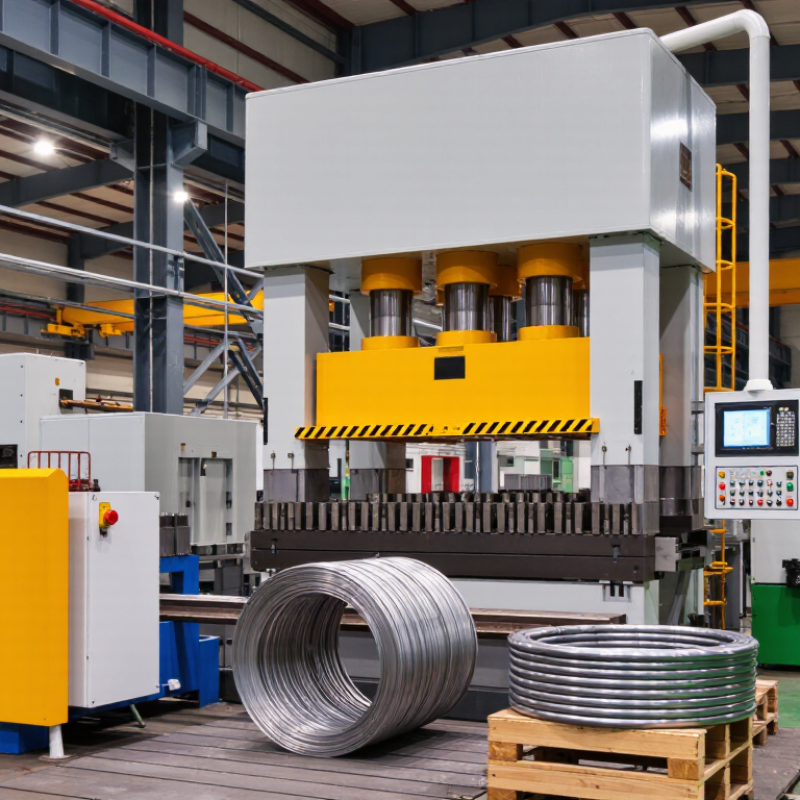
A machine press is industrial equipment that shapes material through controlled force. It may bend, punch, flatten, or form metal sheets and other workable materials. The machine uses a frame, drive system, die, and control unit. During operation, the ram moves downward and applies pressure to the workpiece. Force, stroke length, speed, and die design determine the final result. Even a small setting error can leave cracks, uneven edges, or unwanted marks.
China has become a practical sourcing location because its manufacturing network covers steel fabrication, electrical controls, machining, and automation components. Buyers can often compare several suppliers within one production region. This may reduce tooling delays and simplify customization. A reliable supplier should provide load calculations, technical drawings, safety details, and test records. Ask for sample parts before placing a large order. Measure their thickness and dimensions carefully.
Details matter here.
Factory evaluation should include weld quality, guarding, emergency stops, noise control, and electrical documentation. Confirm the required voltage and applicable safety standards before shipment. I have seen buyers focus heavily on price and overlook installation space or operator training. That mistake becomes expensive later. A lower quotation may also exclude tooling, spare parts, inspection, or delivery support. Supplier communication can be efficient, but specifications still need written confirmation. Clear acceptance criteria protect both sides and make the machine easier to use safely.
A machine press applies controlled force to form, cut, bend, stamp, or compact materials. The capacity required depends on the material, part size, tooling design, and production volume. The figures below represent common reference capacities used across industrial applications. Chinese manufacturers are often considered by global buyers because they can provide a broad range of mechanical, hydraulic, forging, and specialized presses with configurable specifications and competitive production costs.
Capacity is shown in metric tonnes of nominal press force; actual requirements must be confirmed through engineering calculations and tooling trials.
Chinese manufacturers offer several machine press types for different production needs. Mechanical presses suit fast stamping, blanking, and forming work. Their flywheel systems deliver stable cycles and high output. C-frame models provide open access for smaller parts. Four-column presses support deeper forming and better load distribution.
Hydraulic presses use controlled force and adjustable stroke length. They work well for deep drawing, bending, compression, and irregular materials. Pneumatic presses are compact and useful for lighter assembly operations. Servo presses provide accurate motion control, lower energy use, and flexible forming profiles. Some factories also produce eccentric presses, straight-side presses, and hot forging presses. The right choice depends on material thickness, part size, cycle time, and required accuracy.
Tips: Ask for a complete specification sheet. Check rated tonnage, stroke, daylight, table size, motor power, and control-system details. Request load testing and a video of sample production. Confirm electrical compatibility for your plant. A lower quoted price may hide weaker frames or limited support. I have seen buyers compare tonnage only, then discover the stroke was too short. That mistake is expensive. No selection guide is perfect, so review real samples and inspection records. Reliable suppliers should explain maintenance intervals, spare-part access, guarding, and operator training without vague promises. Sensor accuracy and emergency-stop response also deserve practical testing before shipment.
China Best Machine Press Machine for Global Buyers?
How to Evaluate Machine Press Quality, Performance, and Safety
A reliable machine press should show evidence, not impressive paintwork. Inspect the frame, welds, guides, and worktable closely. Look for even weld beads, accurate machining, and protected hydraulic lines. During a factory visit, I would check for oil seepage around cylinders and valves. Small leaks often reveal weak assembly practices.
Performance must match the buyer’s real production needs. Test pressing force, stroke length, cycle time, repeatability, and energy use with the intended material. Ask for recorded test results, not only verbal promises. A press that performs well once may struggle after several hours. Measure noise, vibration, and temperature during continuous operation. These details affect maintenance costs and operator comfort.
Safety deserves equal attention. Confirm guards, emergency stops, two-hand controls, overload protection, and safe access around moving parts. Electrical cabinets should be organized, labeled, and properly protected. Request manuals, inspection records, maintenance schedules, and operator training materials. Independent pre-shipment inspection can reduce uncertainty. Still, documents cannot replace practical testing. A polished demonstration may hide inconvenient weaknesses. I have learned that even experienced buyers can overlook access points during routine maintenance. Leave space for tools, cleaning, and inspection. Also review spare-part availability and response times before placing an order.
| Evaluation Category | Key Quality or Performance Metric | Practical Reference or Benchmark | Recommended Verification Method | Why It Matters to Global Buyers |
|---|---|---|---|---|
| Rated Press Force | Maximum working force, usually expressed in kN or tonnes-force | Select a rated capacity that exceeds the calculated forming, blanking, or punching load. A commonly used engineering margin is approximately 10%–30%, subject to the application and tooling design. | Review the force-capacity curve, calculation sheet, and test the machine under a controlled load. Confirm that the rated force is available at the required stroke position. | Prevents overload, premature wear, frame deformation, and inconsistent production results. |
| Frame and Structural Rigidity | Frame deflection, parallelism, and resistance to deformation under load | The allowable deflection and parallelism should be defined in the machine specification and matched to the required product tolerance. There is no universal value for every press type. | Request a load-deflection report, inspect welded or cast construction, and measure platen or slide parallelism with calibrated instruments. | A rigid frame improves dimensional accuracy, die life, and repeatability during high-load operation. |
| Operating Speed | Approach speed, working speed, return speed, and strokes per minute | Hydraulic presses commonly provide independently adjustable approach, pressing, and return speeds. Mechanical presses are commonly specified by strokes per minute and stroke length. | Compare the actual speed at the required force and stroke rather than relying only on the no-load maximum speed. | Shows whether the machine can meet the required cycle time without sacrificing forming quality or safety. |
| Position and Repeatability | Ram or slide positioning accuracy and repeatability | The target tolerance must be defined by the product and tooling. For precision work, request a measured repeatability value rather than accepting a general claim such as “high precision.” | Perform repeated no-load and loaded cycles using a calibrated linear scale, dial indicator, or equivalent measurement system. | Stable positioning reduces dimensional variation, scrap, and tooling adjustment time. |
| Hydraulic System Performance | Rated system pressure, flow stability, leakage control, and temperature management | Many industrial hydraulic presses operate within approximately 16–25 MPa, but the correct pressure depends on the cylinder, pump, tooling, and application. | Check pressure stability, oil temperature, leakage, filtration, hose routing, and the availability of pressure and flow records during a factory acceptance test. | A stable hydraulic system supports consistent force, lower downtime, and longer service life. |
| Energy Efficiency | Motor power, pump control, idle energy use, and energy consumption per cycle | Variable-displacement or variable-speed hydraulic systems can reduce idle and partial-load energy use compared with fixed-flow systems, depending on the duty cycle. | Request measured power consumption at idle, approach, pressing, and return stages. Compare the figures with the planned production cycle. | Lower energy consumption reduces operating cost and may simplify compliance with regional efficiency requirements. |
| Control System | Programmable parameters, cycle monitoring, fault diagnosis, and data access | A suitable control system should allow authorized adjustment of pressure or force, stroke position, dwell time, speed, and cycle sequence, with password protection where required. | Review the control menu, alarm history, backup procedure, user permissions, and communication interfaces during a live demonstration. | Good controls improve repeatability, troubleshooting, operator training, and production traceability. |
| Guarding and Interlocking | Fixed guards, movable guards, interlocked access doors, and prevention of unintended operation | The safeguarding design should be based on risk assessment according to ISO 12100 and should prevent access to hazardous motion during the operating cycle. | Test every guard and interlock. Opening a protected access point should stop or prevent hazardous motion and should not allow automatic restart. | Effective guarding is essential for protecting operators from crushing, shearing, and entanglement hazards. |
| Emergency Stop System | Accessible emergency-stop devices and controlled stopping behavior | Emergency-stop design should follow ISO 13850. The required stop category and stopping time depend on the machine risk assessment and motion characteristics. | Verify the location, visibility, reset procedure, stopping performance, and prevention of automatic restart after reset. | Provides a rapid means of stopping hazardous movement during an abnormal event. |
| Safety Control Reliability | Safety-related control performance level or safety integrity level | ISO 13849-1 uses Performance Levels (PL) and IEC 62061 uses Safety Integrity Levels (SIL). The required level must be determined through a machine-specific risk assessment. | Request the safety-circuit schematic, validation report, component specifications, and calculation of the achieved PL or SIL. | Confirms that safety functions are engineered and validated rather than relying only on basic electrical components. |
| Electrical Safety | Protective bonding, overcurrent protection, enclosure protection, and control-circuit isolation | Electrical equipment should be designed and documented in line with IEC 60204-1 or the applicable local standard. Supply voltage and frequency must match the installation site. | Inspect the electrical cabinet, wiring labels, protective earth continuity, circuit diagrams, short-circuit protection, and incoming power requirements. | Reduces electric shock, fire, unplanned shutdown, and compatibility risks at the destination site. |
| Noise and Vibration | Sound pressure, vibration transmission, and foundation requirements | Noise limits depend on the workplace and local regulations. The supplier should provide measured sound data and foundation or anchoring requirements. | Measure sound pressure at a defined operator position and inspect vibration during both idle and loaded cycles. | Helps protect workers, maintain product quality, and prevent damage to nearby equipment. |
| Tooling and Die Compatibility | Table size, daylight, stroke, die space, mounting holes, and quick-change provisions | All dimensions must be compatible with the buyer’s existing or planned dies. The maximum die height and permissible eccentric load should be clearly stated. | Compare certified machine drawings with the tooling drawings and conduct a trial using the actual or equivalent die. | Prevents costly modifications and ensures the press can perform the intended process safely. |
| Maintenance and Serviceability | Access to wear parts, lubrication points, filtration, diagnostics, and spare-parts availability | The maintenance schedule should specify inspection intervals, lubricant grades, filter replacement intervals, and expected service-life items. | Review the maintenance manual, spare-parts list, recommended stock, service response process, and remote-support capability. | Predictable maintenance lowers downtime and improves total cost of ownership. |
| Documentation and Compliance | User manual, risk assessment, drawings, electrical diagrams, test records, and conformity documentation | Documentation should be supplied in the buyer’s required language and should identify applicable standards, operating limits, residual risks, and maintenance procedures. | Check document completeness before shipment and ensure the serial number and machine configuration match the supplied records. | Supports installation, operator training, audits, customs clearance, and safe long-term operation. |
| Factory Acceptance Testing | Demonstration of force, speed, accuracy, safety functions, and production cycle | The acceptance protocol should contain measurable pass/fail criteria agreed before manufacture, including load testing and safety-function verification. | Conduct a witnessed test using representative material or tooling and record measured results, deviations, and corrective actions. | Provides objective evidence that the machine meets the agreed technical specification before shipment. |
| Installation and Commissioning | Foundation, leveling, utilities, lifting, electrical connection, and start-up requirements | The installation plan should state floor loading, anchoring, hydraulic oil requirements, electrical capacity, compressed-air needs, and environmental limits. | Prepare a site-readiness checklist and complete commissioning records, safety validation, and operator training after installation. | Reduces delays, installation errors, and warranty disputes at the overseas destination. |
| Total Cost of Ownership | Purchase price plus energy, tooling, maintenance, spare parts, installation, training, and downtime | Compare the expected cost over the planned service period rather than selecting solely by initial purchase price. | Request a complete quotation with exclusions, consumables, warranty scope, delivery terms, service rates, and estimated annual operating costs. | A transparent lifecycle comparison identifies the most economical and reliable solution for the application. |

Choosing the best machine press from China starts with checking the supplier, not the catalog. A polished product page is not proof of quality. Ask for factory photos, production records, and recent inspection reports. Confirm the machine’s force, working speed, stroke length, and material limits. These figures must match your actual production needs.
Tips: Request a video test using material similar to yours. Check electrical standards, safety guards, control systems, and emergency stops. Ask for a detailed quotation, including tooling, packaging, shipping, installation, and spare parts. Speak with two recent customers if possible. Their feedback may reveal delays that brochures never mention.
A reliable supplier should provide clear manuals, drawings, certificates, and maintenance instructions. Verify whether testing is completed before shipment. Ask how faults are handled and how quickly replacement parts can be supplied. Warranty terms should explain labor, components, transport, and exclusions. Payment schedules also deserve careful review. A low price can hide weak support or expensive downtime. I have found that communication quality is often an early warning sign. Slow or vague answers may become serious problems after delivery. Still, even careful buyers can miss small details, especially local voltage requirements or floor-loading limits. Measure your workshop before ordering. The right press must fit the process, the facility, and the people operating it.
China Best Machine Press Machine for Global Buyers?
Comparing a press machine starts with its working envelope, not the headline price. Check rated force, stroke, bed size, cycle speed, and energy use. A cheaper machine may need costly tooling changes later. Price is only the entry ticket. Request a line-by-line quotation covering molds, controls, installation, spare parts, and testing. The ISO Survey 2023 shows ISO 9001 remains the most widely used quality-management certification. Still, a certificate alone proves little. Ask for the certificate number, issuing body, scope, and validity. For electrical and mechanical safety, verify applicable conformity documents for the destination market.
Shipping can change the final cost sharply. UNCTAD’s Review of Maritime Transport 2024 reports that ships carry over 80% of global merchandise trade. Freight delays can therefore affect production schedules. Compare Incoterms, port charges, insurance, export packing, and estimated transit time. Ask for crate photos and a packing list. World Bank’s Logistics Performance Index 2023 evaluates customs, infrastructure, tracking, and timeliness. These categories are useful when checking a supplier’s logistics plan.
After-sales support deserves measurable terms. Request response-time limits, remote diagnosis procedures, service languages, and spare-parts availability. A practical supplier should provide wiring diagrams, operating manuals, maintenance intervals, and operator training. Confirm whether technicians can support installation in your region. Be careful with vague promises. I have seen attractive quotations omit software updates and replacement seals. That weakness is easy to miss. Buyers should also test sample material before payment, because promised accuracy may change with thickness, tooling, and operator skill.