How to Choose the Right Metal for Your Machine Project?
Choosing the right metal for your machine project can be challenging. The decision impacts durability, cost, and overall performance. Various metals are available, each with unique properties. Understanding the differences is crucial for success.
When we think about metal and machine, we often focus on strength and weight. Steel is strong but can be heavy. Aluminum is lightweight but may lack strength in some applications. Knowing these trade-offs helps in making an informed choice. It is easy to get lost in the options.
Sometimes, the right choice might not be the most obvious one. For instance, a project may require corrosion resistance. In this case, stainless steel or specialty alloys could be ideal. However, they are often more expensive. In selecting metals, reflect on your project's specific demands. Balancing performance and budget is not always straightforward and requires careful consideration.
Understanding the Basics of Metal Properties for Machine Projects
When selecting the right metal for your machine project, understanding metal properties is crucial. Metals have unique attributes that affect performance. For instance, tensile strength, hardness, and ductility are key characteristics to consider. According to a report by the Materials Research Society, steel offers high tensile strength, making it ideal for structural applications. Aluminum, on the other hand, has excellent ductility and is lightweight. This makes it suitable for components like housings or frames.
Each metal comes with trade-offs. Steel is robust but can be heavy. Aluminum is lightweight, yet less durable under extreme stress. A 2022 report from the American Society for Metals highlighted that corrosion resistance varies significantly across metals. Stainless steel shows superior resistance but at a higher cost. Choosing the right metal often means balancing strength, weight, and cost factors.
It’s important to reflect on specific project needs. For example, if the project requires high fatigue strength, titanium might be a viable option despite its expense. The ideal metal may not always be the most obvious choice. While some engineers may prioritize cost, others focus solely on performance. An unwarranted reliance on one attribute can lead to difficulties later in the manufacturing process. Flexibility in choice is beneficial, fostering innovation and creative solutions.
Evaluating Mechanical Strength and Durability Requirements
Choosing the right metal involves thorough evaluation of mechanical strength and durability. Different applications require varying levels of resistance to stress, fatigue, and wear. For instance, structural steel typically exhibits a yield strength of 250 MPa, making it suitable for load-bearing applications. In contrast, aluminum alloys can be quite a lightweight option, but often have lower strength, generally around 150 MPa.
More specific needs might demand even higher performance materials. Titanium, with a yield strength reaching 900 MPa, offers remarkable durability but comes with a cost premium. Data from the Journal of Engineering Materials indicates that the fatigue limit of steel is roughly 50% of its ultimate tensile strength, while aluminum may drop as low as 30%.
These stats highlight the importance of balancing durability and cost. The wrong metal can lead to failure. Failures often stem from misuse or a misunderstanding of mechanical loads. Projects should consider environmental factors too. Corrosion resistance, temperature effects, and manufacturing processes are critical. A metal that excels in one area might falter in another. The complexities of metal selection warrant careful consideration and ongoing assessment throughout the project lifecycle.
Considering Corrosion Resistance and Environmental Factors
When selecting a metal for your machine project, consider corrosion resistance. Different environments impact metals differently. For instance, coastal areas have high humidity and salt exposure. These factors increase the likelihood of corrosion. Choosing stainless steel can be a good option, but it isn't always the best.
Environmental factors also play a role. Metals like aluminum may perform poorly in acidic environments. This could lead to rapid degradation. A less obvious option is galvanized steel, which provides decent corrosion resistance at a lower cost. However, its performance can diminish over time, especially if the coating is scratched or damaged.
It’s essential to assess the specific conditions. Are there chemicals present? Is there constant moisture? Reflecting on these questions leads to better choices. Sometimes, you might overlook smaller factors. A thorough evaluation can help avoid problems later. Ignoring environmental considerations often results in costly repairs or replacements.
Assessing Cost and Availability of Different Metals
When selecting metals for machine projects, cost and availability are crucial factors. Metals such as aluminum and steel are widely available, making them budget-friendly options for many applications. According to the U.S. Geological Survey, aluminum production costs have varied significantly. This variability can affect budgeting for projects heavily reliant on aluminum. Understanding current market trends is essential for predicting costs.
Copper, while well-known for its conductivity, can be more expensive and less available compared to aluminum. Recent reports indicated that copper prices surged by about 50% in the past two years. This price increase was driven by supply chain disruptions and rising demand in technology sectors. It's vital to assess these market fluctuations, as they can greatly impact the overall budget of a machine project.
Additionally, availability is often linked to geographic regions. Some metals may be abundant in certain areas but scarce elsewhere. For example, rare earth metals are crucial yet often limited in supply. This scarcity can lead to production delays and over-inflated costs. Engineers must be prepared to reflect on these challenges and consider alternative local materials when necessary. Balancing cost, availability, and project needs is not always straightforward. Decision-making in material selection should involve ongoing research and a willingness to adapt to changing market conditions.
Analyzing Fabrication and Machining Challenges for Selected Metals
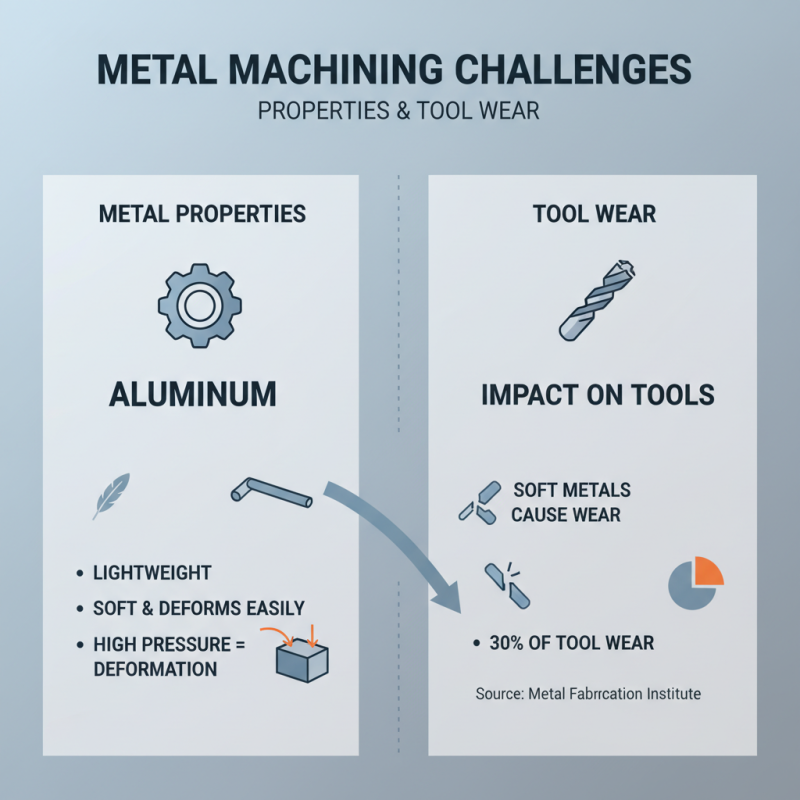
When analyzing fabrication and machining challenges for selected metals, understanding properties is crucial. Different metals react uniquely during machining. For instance, aluminum is lightweight, yet soft. It can deform easily under high pressure. This softness leads to wear on tools. A report by the Metal Fabrication Institute states that 30% of tool wear is due to soft metal components.
On the other hand, steel offers strength and durability. However, it poses challenges too. When machining stainless steel, heat can build up quickly. This heat affects the material properties, leading to warping. According to recent studies, operators face a 15% increase in machining times due to these thermal issues. Selecting the right tool and coolant becomes even more vital.
Copper has excellent conductivity but is notoriously challenging to machine. The tendency to gall means tools can easily grab the material during the machining process. This results in poor surface finish and potential project delays. In fact, industry data indicates that up to 20% of machining errors stem from material choice and handling. Understanding these challenges helps in making informed decisions for any machine project.