How to Choose Welding Machinery for Your Business?
Choosing welding machinery is not simply a matter of comparing prices or choosing the most powerful model. The right equipment should match the work your business performs every week, not an imagined future workload. A repair shop handling thin steel may need different capabilities from a production line joining thick plate. Details matter. Consider the metals, thicknesses, joint designs, available power, and welding processes your team actually uses. These choices affect weld quality, operator comfort, and how smoothly jobs move through the workshop.
Before comparing machines, review recent job records and speak with the people who use the equipment. Ask how often settings change, whether portability matters, and where bottlenecks appear. Then compare output range, duty cycle, controls, consumable availability, service access, and manufacturer documentation. Specifications help, but they do not tell the whole story. A practical demonstration with representative materials can reveal awkward controls, unstable feeding, or setup time. Small annoyances add up.
Budget for more than the purchase price: include installation, training, maintenance, consumables, and potential downtime. Discuss warranty terms and repair support with suppliers, and verify important claims against published specifications. If possible, let experienced operators test shortlisted equipment under realistic conditions. Still, no checklist can remove every uncertainty. Your workload may change, and a technically impressive machine can prove poorly suited to daily jobs. Use this guide to weigh practical requirements, long-term costs, and support before making a considered choice.
Define Your Business’s Welding Tasks and Production Requirements
Before comparing welding machinery, list the actual work: material types, thicknesses, joint designs, weld positions, and required processes. A shop joining 3 mm stainless-steel brackets has different needs from one repairing thick carbon-steel frames. Note whether jobs involve short batches, long production runs, or frequent changeovers. Real parts matter. Test representative samples, including awkward joints that are easy to overlook.
Then estimate output using parts per shift, arc-on time, setup time, and expected downtime. For example, frequent fixture changes may make a flexible system more useful than a faster machine with a narrow operating range. The American Welding Society’s 2023 workforce outlook projected 360,000 welding professionals would be needed in the United States by 2027. That labor pressure makes ease of setup and repeatable operation practical capacity considerations, not just convenience. Still, a staffing estimate cannot predict your shop’s exact workload.
Tips: Record a typical week of jobs before choosing equipment. Include peak demand, not only average volume. Compare samples using the same material, joint, and acceptance criteria. Keep the notes; small differences in fit-up can change results.
Match Welding Processes and Machine Types to Your Applications
Choose the process from the job, not the machine’s feature list. GMAW (MIG) is practical for steady shop production and repeatable welds. TIG offers finer control on thin stainless steel or aluminum, but usually moves more slowly. Stick welding handles outdoor repairs well because it does not rely on external shielding gas. For thicker steel and higher deposition rates, consider flux-cored arc welding. Match the power source to your materials, thickness range, duty cycle, and available input power.
The American Welding Society’s 2020 workforce report projected that the United States would need 360,000 welding professionals by 2027. That forecast is a useful reminder: operator training and clear machine controls matter alongside output. A multiprocess unit can suit varied repair work, while a dedicated wire-feed setup may be more efficient for repeated shop jobs. I would test sample joints before buying. The “best” machine can still be a poor fit if setup changes slow the crew or the duty cycle falls short.
Tips: List your three most common jobs. Record material, thickness, position, and work location. Ask suppliers for a hands-on trial, then compare weld quality, setup time, and consumable use. Small details count.
Check Power Supply, Duty Cycle, and Material Compatibility
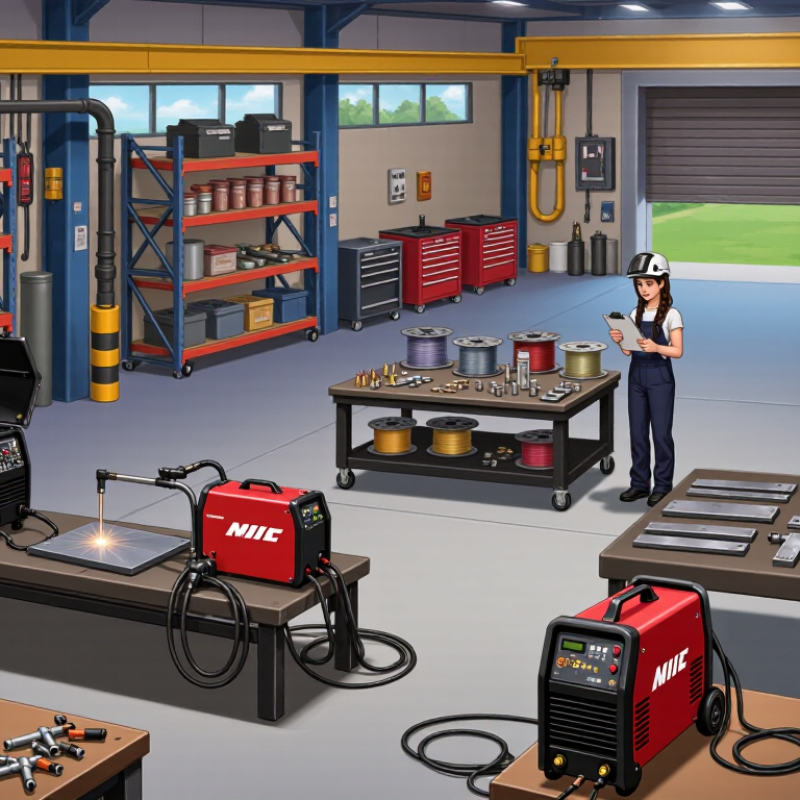
Choosing welding machinery starts with the power available at your worksite. Check the machine’s input voltage, phase requirements, and rated current against the outlet and circuit capacity. A unit that repeatedly trips a breaker can interrupt production and may signal an overloaded circuit. If the power supply is uncertain, ask a qualified electrician to inspect it before purchase. Allow room for voltage variation, too.
Duty cycle tells you how long a machine can weld within a ten-minute period at a stated output. For example, a 40% duty cycle means four minutes of welding, followed by six minutes of cooling. Match this rating to your real work pattern, not an idealized estimate. Continuous fabrication needs a higher duty cycle than occasional repairs. Also check material compatibility: steel, stainless steel, and aluminum may call for different processes, settings, and accessories. Confirm the machine’s output range and supported wire or electrode sizes. A mismatch can cause poor starts, excess spatter, or weak-looking beads. I have seen buyers focus on maximum amperage and overlook the materials they actually use.
Tips: Bring sample material and note its thickness before comparing machines. Ask to test a representative weld, if possible. Keep a simple log of voltage, wire speed, and results; the first settings may need adjustment.
How to Choose Welding Machinery for Your Business
Check the available power supply, the machine’s rated duty cycle, and compatibility with your materials and welding process.
Duty cycle is the percentage of a 10-minute period a welder can operate at its rated output under specified conditions. For example, a 60% duty cycle allows 6 minutes of welding followed by 4 minutes of cooling. These bars illustrate the calculation, not specifications for a particular machine. Before buying, confirm that the machine’s input voltage and phase match your site, and verify that its process and output range suit your material, thickness, and consumables.
Compare Safety Features, Training Needs, and Maintenance Costs
Choosing welding machinery means weighing worker protection alongside output and purchase price. Compare systems for clear controls, emergency stops, thermal protection, and suitable fume extraction. Check whether guards and cable connections are easy to inspect before each shift. A clean, readable control panel matters when gloves are bulky. Small details add up.
Training needs vary with the process and the machine’s controls. Ask how long a new operator typically needs to learn safe setup, parameter adjustment, and shutdown. Practical instruction should cover workpiece preparation, electrode or wire changes, and what to do when the machine behaves unusually. A short demonstration is not enough. Keep procedures near the work area, and allow supervised practice on scrap material. Even experienced welders may need time to adapt to unfamiliar settings.
Maintenance costs include more than replacement parts. Review service intervals, consumables, electrical requirements, and whether routine checks can be handled in-house. Ask suppliers for a written maintenance schedule and realistic costs for common wear items, such as liners, contact tips, or filters. Track downtime as well; an inexpensive machine can become costly when repairs interrupt a production run. I still find estimates imperfect, especially when usage changes. Compare the assumptions behind each quote, not just its headline price.
Evaluate Suppliers, Support, and Equipment Performance before Buying
How to Choose Welding Machinery for Your Business?
A machine’s quoted price tells little about the support you will receive after installation. Ask suppliers who handles commissioning, how quickly technicians respond, and which replacement parts they keep available. Request written service terms and operator training details. Ask for proof. The U.S. Bureau of Labor Statistics projects 2% employment growth for welders from 2023 to 2033, with about 45,800 job openings each year. That labor outlook makes practical training and easy-to-use controls worth weighing alongside purchase cost. A supplier’s polished demo is useful, but it cannot answer every shop-floor question.
Test equipment with your actual materials, wire, and production settings before buying. Check arc stability, wire-feed consistency, duty cycle, and how easily operators adjust controls while wearing gloves. Record weld quality, changeover time, and downtime; compare results across shifts, not just during a short trial. A specification can look convincing on paper and still disappoint on a crowded shift. Ask for service-response examples from comparable customers, while recognizing that their conditions may differ from yours. I would not treat the lowest price or the highest duty-cycle rating as a decision by itself. Keep the test notes, including the awkward results. Those details can expose a mismatch before it becomes an expensive habit.