
What Are the Top 10 Modern Wall Light Types?

Modern Wall Light design has moved beyond simple illumination. It now shapes mood, comfort, movement, and architectural character. A slim reading sconce can brighten a bedside table without glare. A sculptural uplight can turn a plain hallway into a layered visual experience.

John Cullen, a respected lighting designer, once said, “Good lighting is not about seeing the light source, but seeing what it does.” That principle guides this exploration of the top 10 Modern Wall Light types. The list will examine picture lights, swing-arm sconces, concealed wall washers, cylinder lights, globe fixtures, LED strip systems, adjustable spotlights, bathroom vanity lights, outdoor wall lanterns, and decorative statement pieces.

Each type serves a different purpose. Some support focused tasks. Others soften shadows across textured plaster or highlight artwork. Practical details matter, too. Beam angle, color temperature, lumen output, dimming compatibility, mounting height, and IP rating can change the final result. A warm 2700K fixture may feel inviting in a bedroom but appear too yellow beside a cool-toned mirror.

Small details matter.

The categories also overlap. A wall washer may become decorative, while a minimalist sconce may provide useful reading light. No list is perfect, because room scale, surface finish, and personal taste influence every decision. That uncertainty deserves attention. Good choices come from observing how light behaves at night, not merely judging a fixture in a showroom.
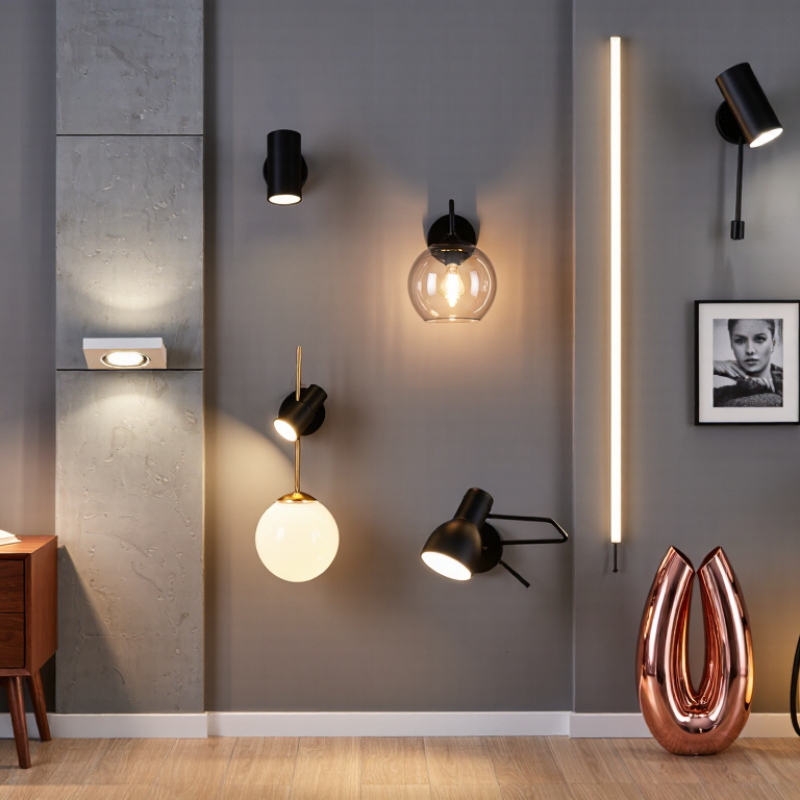
What Are the Top 10 Modern Wall Light Types?

Defining Modern Wall Lights and Their Core Design Features

Modern wall lights are fixtures mounted directly on a wall, but their design goes beyond simple illumination.

The term “modern” is not perfectly fixed. It usually describes clean shapes, restrained decoration, useful technology, and materials such as metal, glass, wood, or textured ceramic. In practice, the best fixture balances appearance with light control.

Common modern types include swing-arm lights, reading lights, picture lights, plug-in sconces, globe sconces, cylinder lights, linear bars, up-and-down lights, recessed wall lights, and sculptural designs.

Each creates a different visual effect. A swing-arm model suits a bedside area, while a picture light highlights artwork without flooding the room.

Up-and-down fixtures can wash a narrow wall with soft vertical beams. Cylinder forms often provide sharper architectural shadows.

Core design features include simple geometry, concealed wiring, adjustable direction, and layered brightness.

A frosted diffuser reduces glare near eye level. A deep shade controls spill beside a sofa or hallway.

Warm light around 2700K to 3000K often feels comfortable in living spaces, though personal preference matters.

I have found that scale is frequently underestimated; a small sconce may disappear on a wide wall. Another honest limitation is that decorative fixtures can create dark patches when their beam angles are too narrow.

Check the wall structure, switch position, maintenance access, and electrical requirements before installation. For fixed wiring, a qualified electrician should assess the connection.

Understanding the Main Categories of Modern Wall Light Types

What Are the Top 10 Modern Wall Light Types?

Understanding the main categories of modern wall light types makes room planning more practical. Each design controls light differently.

Sconces provide balanced ambient light beside beds, mirrors, or hallways.

Up-and-down lights cast beams toward the ceiling and floor.

Picture lights highlight artwork without flooding the whole wall.

Swing-arm lights offer adjustable illumination for reading.

Plug-in wall lights suit renters and reduce installation work.

Flush wall lights sit close to the surface and work well in narrow spaces.

Semi-flush styles add more depth with a small gap behind the shade.

Wall washers spread soft light across textured surfaces.

Reading lights focus a narrow beam near chairs or headboards.

Outdoor wall lights support entrances, patios, and covered walkways.

Tips: Check the beam angle, color temperature, and mounting height before buying. Warm white light often feels calmer in bedrooms. Neutral white can improve visibility in kitchens and work areas. A dimmer adds useful control, but compatibility must be confirmed.

In my own room-planning experience, the prettiest fixture is not always the most useful. A clear glass shade may create glare near eye level. Dark finishes can also make a small hallway feel heavier. I once chose a compact sconce for a reading corner, then noticed its beam missed the page. That mistake taught me to measure the chair, wall, and eye line together. Electrical connections should be checked by a qualified professional. Product labels can be confusing, and category names sometimes overlap. Consider the task, surface, and surrounding light before trusting appearance alone.

Comparing Indoor Modern Wall Lights by Function and Placement

What Are the Top 10 Modern Wall Light Types?

Modern wall lights work best when function matches placement. The ten most useful types include swing-arm, picture, vanity, reading, uplight, downlight, flush, plug-in, adjustable spotlight, and sculptural sconce designs. Swing-arm lights suit bedside walls because their reach supports reading without lighting the entire room. Vanity lights work beside mirrors, where even illumination reduces facial shadows. Picture lights highlight artwork, while uplights soften a dark hallway or living-room corner.

Placement changes the experience. A narrow beam can guide movement along stairs, but it may create harsh patches on textured walls. Flush fixtures suit compact corridors. Adjustable spotlights are better for shelves, artwork, or task zones. The U.S. Department of Energy reports that modern LED systems can deliver high efficacy and long service life, but actual comfort still depends on glare control and color quality. The International Energy Agency also identifies lighting efficiency as an important energy-saving opportunity. Efficiency alone is not enough.

Tips: Mount reading lights near shoulder height, then test the arm movement from a seated position. Keep vanity fixtures close to eye level. Use warmer light in bedrooms and living rooms. A common mistake is choosing brightness before considering beam direction. I have found that a dimmer often improves flexibility more than a stronger lamp. The “best” type is not universal. Room proportions, wall color, and furniture placement can change the result. Always check the product’s color-rendering data, not only its wattage.

What Are the Top 10 Modern Wall Light Types? - Comparing Indoor Modern Wall Lights by Function and Placement

No. Modern Wall Light Type Primary Function Recommended Indoor Placement Typical Light Distribution Typical Brightness Common Color Temperature Useful Features
1 Up-and-Down Sconce Ambient and architectural accent lighting Living rooms, hallways, stairwells, and entryways Light directed upward and downward Approximately 300–800 lumens 2700–3000 K Creates vertical wall-washing effects; dimming is often available
2 Adjustable Reading Sconce Focused task and reading light Beside beds, sofas, lounge chairs, and reading nooks Directional beam with an adjustable arm or shade Approximately 300–700 lumens 2700–3500 K Swivel or pivot adjustment; separate switching is practical for bedrooms
3 Picture Light Artwork and wall-display illumination Above paintings, framed photography, and decorative panels Wide, shallow beam aimed at a vertical surface Approximately 200–600 lumens 2700–3500 K Adjustable head; high color rendering is recommended for artwork
4 Vanity Wall Light Face-level task lighting Bathrooms, dressing areas, and bedroom vanities Diffused frontal or side illumination Approximately 500–1200 lumens per fixture 3000–4000 K Frosted diffusers reduce glare; damp-location suitability is important in bathrooms
5 Linear Wall Light General illumination and visual structure Hallways, dining areas, bedrooms, and long feature walls Long, even horizontal or vertical distribution Approximately 600–1500 lumens 2700–3500 K Works well in pairs or repeated arrangements; integrated LED is common
6 Picture-Frame or Box Wall Light Decorative ambient and accent lighting Living rooms, corridors, hospitality-style interiors, and feature walls Soft light filtered through a front panel or frame Approximately 300–900 lumens 2700–3000 K Adds visual depth; opal or frosted panels provide a softer appearance
7 Plug-In Wall Lamp Flexible ambient, reading, or task lighting Rental homes, bedrooms, offices, and areas without hardwired outlets Depends on shade; commonly downward or diffused Approximately 400–1000 lumens 2700–3500 K Easy installation; visible cord management should be considered
8 Swing-Arm Wall Lamp Adjustable task and bedside lighting Bedrooms, home offices, libraries, and compact living spaces Movable directional light Approximately 400–900 lumens 2700–3500 K Extends or folds toward the user; useful where table space is limited
9 Flush-Mount Wall Light Low-profile ambient or circulation lighting Narrow corridors, stair landings, entryways, and small rooms Upward, downward, or front-facing diffusion Approximately 300–1000 lumens 2700–4000 K Space-saving profile; suitable for locations where projection from the wall must be minimized
10 Swinging or Articulated Arm Light Multi-purpose task and accent lighting Home offices, studios, kitchens, and flexible living areas Highly directional beam with multiple adjustment points Approximately 400–1200 lumens 3000–4000 K Offers broad positioning flexibility; a stable mounting surface is required

Exploring Outdoor Wall Lights for Security, Style, and Ambience

What Are the Top 10 Modern Wall Light Types?

Outdoor wall lights can make an entrance feel safer, warmer, and more intentional. In practical installations, I often see ten useful types: wall sconces, lanterns, up-and-down lights, cylinder lights, bulkhead lights, picture lights, step lights, recessed fixtures, motion-sensor lights, and smart-controlled lights. Each serves a different purpose. A downward sconce can brighten a lock without glaring into visitors’ eyes. An up-and-down fixture creates sharp beams across textured brick. Bulkhead lights suit exposed areas because their solid housing handles rain and dust well. Recessed lights offer a cleaner appearance, though installation may require careful wall planning.

Security should guide placement, not overpower the design. Mount lights near doors, gates, side paths, and garage corners. Motion sensors can discourage unwanted access, but overly sensitive settings may activate whenever a cat crosses the garden. Warm white light usually creates a calmer ambience than harsh blue-white light. I have found that matching the fixture shape with the building’s lines matters more than choosing the brightest option. Still, I once underestimated shadowy corners beside a driveway. That detail needed correction.

Tips: Aim light toward walking surfaces, not eye level. Choose weather-resistant housings for exposed walls. Check the fixture’s brightness after dark, because daytime impressions can be misleading. Keep cables protected and ask a qualified electrician to handle fixed electrical connections. Clean lenses occasionally; dust can turn a crisp beam into a dull patch. Less glare. Better comfort.

Choosing the Right Modern Wall Light for Different Spaces

Choosing the right modern wall light begins with the room’s purpose, not its appearance. In my experience, a narrow hallway benefits from slim cylinder sconces or compact flush lights. They provide clean illumination without obstructing movement. A living room feels warmer with globe sconces, picture lights, or gentle uplights. Use dimmable fixtures when possible. Evening comfort matters.

Bedrooms need more control. Swing-arm wall lights work well beside beds because their direction can change. Reading sconces should sit near shoulder height, but the exact position depends on the mattress and headboard. For bathrooms, choose sealed fixtures rated for damp areas. Vertical lights beside a mirror usually reduce facial shadows better than one overhead light. Avoid placing bright lamps directly above eye level.

Dining areas can use decorative linear sconces or paired wall lights to frame a cabinet. Plug-in designs suit renters, while hardwired fixtures create a cleaner finish. Outdoor walls require weather-resistant construction and suitable electrical protection. Check the fitting’s safety rating before installation. I once selected a beautiful light that looked too small after installation; scale is easy to underestimate. Measure the wall, furniture, and viewing distance first. Color temperature also changes the mood: warmer light feels relaxing, while neutral light supports detailed tasks. The best choice is practical, but a little imperfect character can make a room feel lived in.

What Are the Top 10 Modern Wall Light Types?

Choosing the right modern wall light depends on the space, mounting position, and required brightness. This chart compares typical lumen ranges for ten widely used wall-light types.

Typical lumen ranges are general residential and light-commercial guidelines. Actual brightness varies by fixture size, lamp type, diffuser, color temperature, and installation purpose.