China Top 10 Neatening Machine Manufacturers?
China’s neatening machine industry has developed quickly, supported by strong textile manufacturing capacity, skilled engineers, and extensive supplier networks. This article examines ten notable Chinese manufacturers serving garment factories, textile workshops, and industrial sewing operations.
A neatening machine must do more than produce a clean edge. It should maintain stable thread tension, consistent stitch density, low vibration, and reliable performance during long production shifts. Buyers should inspect actual seam samples, machine frames, motor systems, spare-part availability, and technical support. Factory photographs alone are not enough.
Textile engineering scholar Dr. Sabit Adanur emphasizes, “Good textile production begins with controlled process conditions.” This principle applies directly to machine selection. Even advanced equipment can perform poorly when operators lack training or fabric settings are unsuitable.
The comparison will consider manufacturing experience, product range, automation, quality control, export history, customization, and after-sales service. It will also examine practical details, such as oil leakage, noise levels, control-panel usability, and maintenance access.
The ranking is not absolute. Different factories need different solutions. A low-cost model may suit a small workshop, while an automated line may better serve high-volume production. Some manufacturers provide impressive specifications but limited independent performance data. That weakness deserves attention.
Readers should verify certifications, visit production facilities when possible, and request trial sewing before signing a purchase agreement. A reliable neatening machine supplier should explain both its strengths and its limitations. That honesty often matters more than polished marketing.
Neatening Machines Explained: Functions, Stitch Types, and ISO 4915 Standards
China Top 10 Neatening Machine Manufacturers?
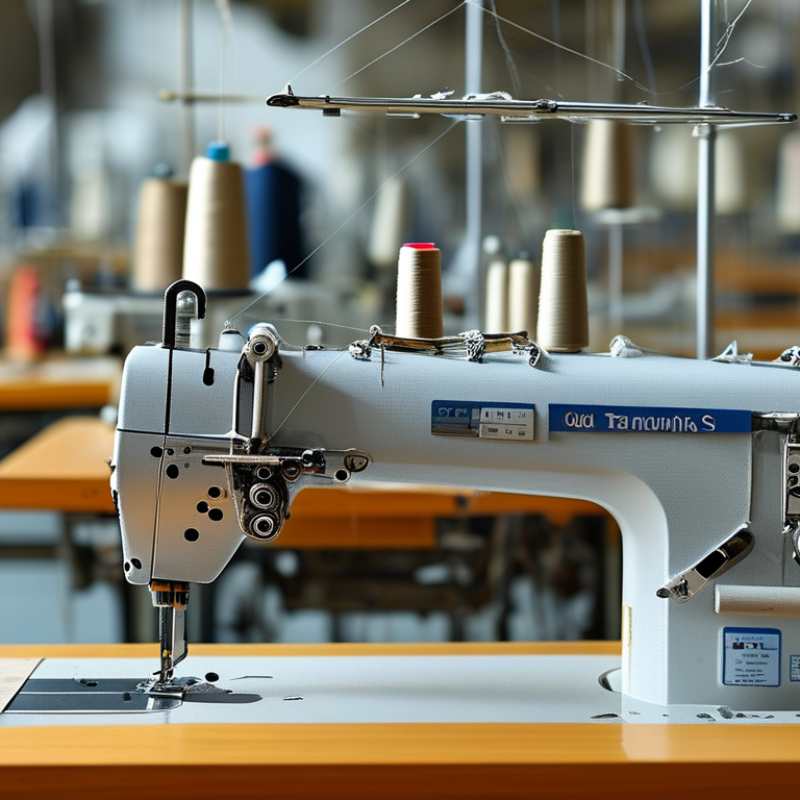
Neatening machines finish raw fabric edges during garment production. They trim loose cloth, wrap thread around the edge, and reduce fraying. Many models also use differential feed to control stretching on knitted fabric. A practical operator checks the cut edge, thread balance, and seam recovery before approving bulk production.
ISO 4915:2021 classifies stitch structures, rather than ranking machine quality. Stitch type 503 forms a three-thread overedge seam. Type 504 adds stronger edge coverage, while type 514 creates a four-thread mock-safety stitch. Type 516 combines overedge and safety-stitch functions for demanding seams. These codes help technicians compare samples consistently. They do not guarantee durability.
Textile Exchange’s Materials Market Report 2024 states that polyester represented about 57% of global fiber production in 2023. That figure matters because synthetic fabrics can create heat, stretching, and thread-tension challenges. Technicians should test needle size, trimming width, and differential-feed settings together. Small changes can alter puckering.
The Global Textile Machinery Market report by Grand View Research projects continued automation growth through the decade. Yet automation does not replace inspection. A sensor may detect thread breaks, but it may miss a soft, uneven edge. That distinction is often missed. ISO language is precise; production conditions are not. In my view, a sewn sample under actual washing conditions remains essential, although many factories still test too little.
China’s Textile Machinery Market: 2023 Output, Exports, and Growth Data
China Top 10 Neatening Machine Manufacturers?
China’s textile machinery market remained influential in 2023. China Customs data, reported by the China Textile Machinery Association, placed textile machinery exports near US$4 billion. Import demand was weaker, reflecting slower global investment and cautious factory spending. Industry operating revenue also stayed above RMB100 billion, according to association statistics. These figures show scale, but not every machine category grew equally.
Neatening machines support edge finishing, thread trimming, seam cleaning, and garment presentation. For a practical top-ten evaluation, buyers should examine 2023 delivery records, export coverage, machine stability, and service response. The International Textile Machinery Federation reported strong Chinese participation in global machinery shipments, especially in spinning, weaving, and finishing equipment. However, shipment volume is not the same as technical leadership. That distinction matters.
Tips:
Request running samples before purchase. Check motor efficiency, blade life, noise levels, and spare-part availability. Ask for verified export references, not only factory photos. A useful test should include different fabrics, uneven seams, and continuous operation. Some published market estimates conflict slightly. This happens because customs codes, factory output, and shipment values measure different things. Buyers should compare the reporting method before trusting a growth percentage. Machine performance can look excellent during a short demonstration, yet service delays may become costly after installation.
Ranking Criteria: Speed, Stitch Quality, Certifications, and Service Coverage
China Top 10 Neatening Machine Manufacturers?
A credible top-ten ranking should measure performance, not showroom appearance. Speed matters, but it must be tested under normal production conditions. Run identical fabric panels at the manufacturer’s stated speed. Record cycle time, vibration, heat, and thread breaks. A fast machine that stops frequently may lose its advantage.
Stitch Quality
Stitch quality deserves equal attention. Inspect edge width, tension balance, skipped stitches, and seam neatness after repeated runs. Experienced evaluators should test light, medium, and heavier fabrics. Certifications also require careful verification. Check machine safety documents, quality-management certificates, and current export compliance records. A certificate alone cannot prove reliable daily operation. It only supports the evidence.
Service Coverage
Service coverage often separates strong manufacturers from average suppliers. Review technician availability, spare-parts locations, remote troubleshooting, installation support, and response times. Ask for service records, not only promises. A practical ranking should combine factory audits, customer references, sample testing, and warranty terms. This approach reflects real purchasing experience. Still, no ranking is flawless. Some manufacturers may perform better with specialized fabrics than with common test materials. Regional service quality can also change over time. The final list should remain transparent, evidence-based, and open to revision when new performance data appears.
China’s Top 10 Neatening Machine Manufacturers: Products and Key Metrics
China’s Top 10 Neatening Machine Manufacturers: Products and Key Metrics
China’s top ten neatening machine manufacturers compete through edge quality, production speed, and control stability. Their product lines commonly include fabric edge neatening units, thread trimming systems, automatic tension controls, and integrated inspection modules. A credible ranking should compare output per hour, compatible fabric widths, energy use, defect rates, and after-sales response. The 2024 ITMF International Textile Machinery Shipment Statistics reported uneven global demand, with several machinery categories facing shipment declines. This makes practical performance more important than catalogue claims.
Trade evidence also matters. China Customs data shows China remains a major exporter of textile machinery, while Grand View Research estimates steady global textile machinery market growth through 2030. These reports support strong manufacturing capacity, but they do not prove that every supplier delivers equal precision. Buyers should request factory acceptance tests, sample runs, spare-parts lists, and documented maintenance records. ISO 9001 certification can support process control, yet it is not a guarantee of excellent stitching. Rankings remain imperfect.
Tips: Compare real fabric samples, not only brochures. Measure edge consistency after eight continuous hours. Ask whether local technicians can respond within forty-eight hours. Check noise, power consumption, and operator training needs. A lower purchase price may become expensive after repeated adjustments.
Buyer Comparison: 6,000-SPM Performance, Energy Use, Warranty, and ROI
China’s top neatening machine manufacturers should be compared beyond catalog speed. A 6,000-SPM rating shows potential, not guaranteed output. Actual speed falls with heavy fabric, frequent stops, needle changes, and operator skill. I would request a timed trial using the buyer’s real material. That test is more useful than a showroom demonstration.
Energy deserves equal attention. The European Commission’s motor-systems studies estimate that motors can represent about 46% of industrial electricity use. Ask for measured watt-hours per 1,000 cycles, not only motor wattage. Servo drives, standby controls, and automatic lubrication can reduce waste, although savings depend on working patterns. The ITMF International Textile Machinery Shipment Statistics reports continued investment in automated textile equipment, but shipment growth does not prove better payback for every factory. That distinction is often missed.
Warranty terms should cover the control board, motor, sensors, and labor. Twelve months is common, but response time and spare-part availability may matter more. Calculate ROI with effective cycles per hour, electricity cost, maintenance, rejected pieces, and operator wages. My first estimate was too optimistic because I ignored stoppage time. A practical model compares three scenarios: rated speed, observed speed, and a conservative 70% utilization case. Payback under 24 months can look attractive, yet a low purchase price may fail when downtime and service travel are included. Record the baseline before choosing among suppliers.
China Top 10 Neatening Machine Manufacturers? — Buyer Comparison: 6,000-SPM Performance, Energy Use, Warranty, and ROI
SPM: stitches per minute. All figures should be confirmed through technical datasheets, sample testing, warranty terms, and a commercial quotation before purchase.