Top Operator Machine Manufacturers for Global Buyers

Global buyers are reassessing how machines perform, not merely how they look in catalogs. The phrase operator machine covers equipment shaped by human control, workplace safety, uptime, and service access. These factors become critical when a machine must work through long shifts, changing temperatures, and limited local support.

Industry data shows why manufacturer selection deserves careful research. The International Federation of Robotics reported 541,302 industrial robots installed worldwide in 2023, with more than four million operating globally. The World Robotics 2024 report also identified electronics and automotive production as major demand centers. These figures do not measure every operator machine category. Still, they reveal a wider movement toward automation, connected controls, and measurable productivity.

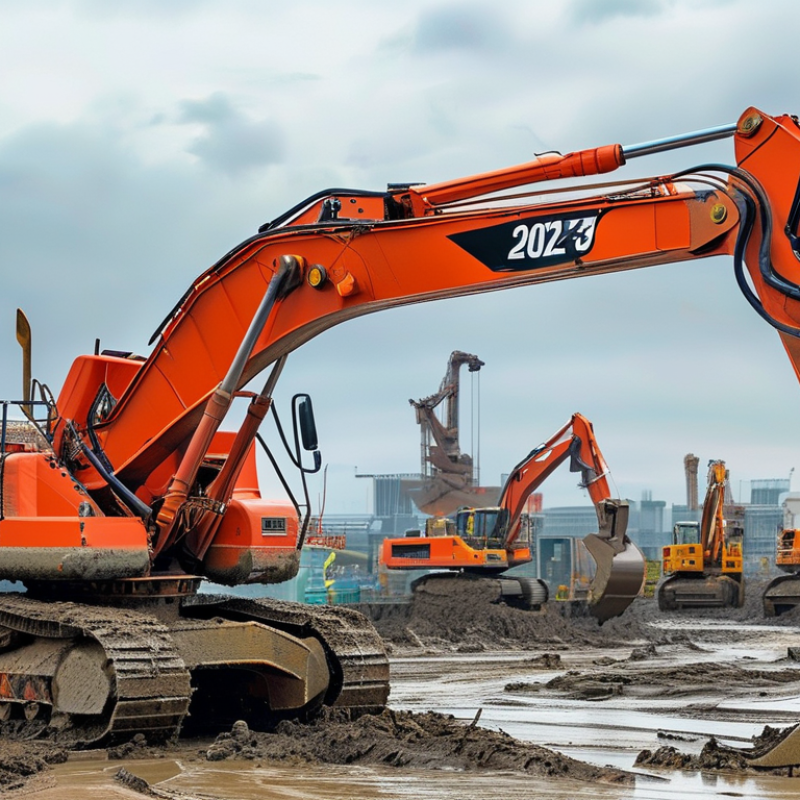
Construction equipment buyers face similar pressure. The 2024 Off-Highway Research market outlook described uneven regional demand, influenced by infrastructure investment, financing costs, and replacement cycles. In practical terms, a hydraulic excavator may look impressive at a trade show. Its real value appears later, beside a muddy worksite, when diagnostics, spare parts, and operator visibility matter.

This guide examines top operator machine manufacturers for global buyers. It considers engineering depth, certification practices, factory capacity, dealer coverage, training, warranty terms, and after-sales response. Public rankings can help, but they are not final proof. A famous brand may still perform poorly in a distant market. A smaller manufacturer may provide stronger regional support.

Buyers should compare documented performance with field references, not marketing promises. TÜV, ISO, CE, and other credentials require careful verification for the target market. The evaluation is imperfect, but transparent criteria reduce expensive surprises.
Top Operator Machine Manufacturers for Global Buyers

Types of Operator Machines and Their Main Industrial Uses

Operator machines cover several equipment families, each built for a different industrial task.

Forklifts move pallets through warehouses, factories, and distribution centers.

Excavators remove soil, prepare foundations, and handle demolition work.

Telehandlers lift materials across uneven construction sites.

Aerial work platforms give technicians controlled access to façades, roofs, and overhead systems.

Agricultural tractors support plowing, planting, and field transport.

Their demand reflects wider industrial activity.

Grand View Research estimated the global construction equipment market at approximately USD 232.9 billion in 2023, with continued growth expected through 2030. The report links this expansion to infrastructure investment and urban development.

Meanwhile, the International Energy Agency reported that global electricity demand rose strongly in 2024, increasing pressure on factories to improve material handling efficiency.

Electric forklifts are gaining attention here. Quiet operation helps in enclosed facilities.

Selection requires more than engine power.

Buyers should compare rated capacity, lift height, ground clearance, turning radius, maintenance access, and operator visibility.

A machine that looks powerful may perform poorly on narrow aisles or soft ground.

Reports also show market forecasts can vary widely by region and equipment definition.

That matters.

Local service coverage, training quality, spare-parts availability, and safety standards often decide the real operating cost.

In practice, a slightly slower machine may deliver better productivity when downtime is expensive.

The overlooked detail is charging or refueling logistics.

Without a workable daily plan, efficiency claims remain theoretical.

Key Features That Define a Reliable Operator Machine Manufacturer

Top Operator Machine Manufacturers for Global Buyers

Key Features That Define a Reliable Operator Machine Manufacturer

A reliable operator machine manufacturer understands real working conditions, not only product specifications. Experienced engineers examine dust, vibration, heat, narrow aisles, and long operating shifts. Their machines should offer stable controls, clear displays, strong frames, and accessible maintenance points. Small design details matter. A loose connector can stop an entire production line.

Quality evidence separates capable manufacturers from persuasive sellers. Look for documented load testing, component traceability, inspection records, and practical operator training. Clear manuals should explain setup, daily checks, fault codes, and replacement procedures. Manufacturers with field service teams can respond faster when a machine fails during a busy shift. They should also provide realistic delivery schedules and honest performance figures.

Customization is useful, but it should follow a clear engineering process. A trustworthy supplier studies the site before changing attachments, software, or dimensions. They should explain what the machine cannot do. That honesty builds confidence. No manufacturer gets every decision right. Some may overcomplicate controls or underestimate cleaning time. Feedback from operators can expose these weaknesses early. Factory visits, reference projects, and trial demonstrations reveal more than polished brochures. Reliable manufacturers keep improving after delivery, using service data and operator comments to refine future machines.

Top Operator Machine Manufacturers for Global Buyers - Key Features That Define a Reliable Operator Machine Manufacturer

Evaluation Dimension Practical Buyer Benchmark Characteristics of a Reliable Manufacturer Recommended Verification Evidence Potential Warning Sign
Product Range At least 3 equipment categories, such as scissor lifts, boom lifts, vertical lifts, or personnel lifts. Strong Portfolio
Product specifications are clearly defined for working height, platform capacity, machine width, turning radius, and operating environment.
Request current product catalogs, technical drawings, load charts, operating manuals, and application references for each model. High Risk
Generic brochures with missing dimensions, load limits, or operating restrictions.
Load Capacity Common operator access machines provide approximately 200–500 kg of platform capacity, depending on model type. Rated capacity is supported by clearly stated load distribution requirements, platform dimensions, and stability calculations. Check the load chart, nameplate, overload protection settings, and independent test documentation. Capacity is advertised without explaining whether it includes operators, tools, and materials.
Working Height Typical product coverage ranges from approximately 6 m for compact units to more than 40 m for specialized boom equipment. Working height, platform height, horizontal outreach, and up-and-over clearance are reported separately and accurately. Review dimensional drawings, operating diagrams, and demonstration videos showing the machine at maximum reach. “Maximum height” is used without specifying whether it means platform height or working height.
Safety Compliance Equipment should be designed and tested against applicable regional requirements, such as EN 280, ISO 16368, ANSI/SAIA A92, or CSA B354. Safety systems include emergency lowering, platform overload protection, tilt sensing, emergency stop controls, guardrails, and manual recovery procedures. Request certificates, declaration of conformity, risk assessment, inspection records, and the latest safety manual. Compliance is claimed only as “CE” or “international standard” without a document number or scope.
Power and Energy Options Battery-powered machines commonly use 24 V, 48 V, or 80 V systems; diesel or hybrid systems are used for rough-terrain applications. The manufacturer provides battery chemistry, charging time, duty-cycle information, gradeability, noise level, and cold-weather operating data. Verify battery datasheets, charger specifications, expected operating cycles, and replacement-battery availability. Runtime is stated only as a maximum value without a defined load, surface, temperature, or duty cycle.
Build Quality Critical structural components should use traceable materials, controlled welding procedures, and corrosion-resistant finishing. Production includes documented welding inspection, serial-number traceability, powder coating or equivalent protection, and final functional testing. Ask for quality-control procedures, material certificates, weld inspection records, and factory acceptance-test forms. No serial-number system, no inspection records, or visible inconsistencies in welds and surface finishing.
Quality Management A documented quality system with incoming inspection, in-process checks, final testing, and corrective-action procedures. Quality issues are tracked by batch or serial number, with measurable targets for defect reduction and product improvement. Request a valid quality-management certificate, inspection checklist, nonconformity report, and sample factory test record. Quality claims rely only on marketing language and cannot be supported by controlled records.
Warranty Coverage A standard warranty of 12–24 months is common; batteries, tires, and wear parts may have separate terms. Warranty conditions clearly define coverage, exclusions, labor responsibility, transport costs, claim deadlines, and spare-part availability. Review the signed warranty policy, sample claim procedure, service-level commitments, and historical claim response times. Warranty duration is stated without explaining exclusions or international claim handling.
Spare Parts Support Fast-moving parts should normally be available within 3–10 business days, subject to destination and stock location. The manufacturer maintains parts lists, component codes, service kits, recommended inventory levels, and long-term parts support. Request a parts catalog, stock report, average fulfillment data, and a list of critical replacement components. Parts are identified only by photographs or informal descriptions rather than stable part numbers.
Technical Service Initial technical response within 24–48 hours is a practical benchmark for international buyers. Service staff can provide fault-code interpretation, electrical diagrams, maintenance schedules, remote troubleshooting, and repair guidance. Confirm service contact channels, escalation procedures, training materials, and sample troubleshooting documentation. Support is available only through sales staff with no dedicated technical contact.
Operator Training Basic delivery training commonly requires 1–3 days, depending on machine type, local rules, and operator experience. Training covers pre-use inspection, safe driving, platform operation, emergency lowering, charging or refueling, and daily maintenance. Request operator manuals, training agendas, competency checklists, inspection forms, and available multilingual materials. Training is limited to a brief product demonstration with no documented competency assessment.
Customization Capability Common options include non-marking tires, cold-weather packages, corrosion protection, regional power systems, and telematics. Custom changes are controlled through drawings, engineering approval, prototype testing, and revised documentation. Request an option list, engineering-change process, sample customized drawing, and confirmation of certification impact. Modifications are promised verbally without confirming structural, electrical, or compliance consequences.
Production Lead Time Standard machines often require approximately 8–16 weeks after order confirmation; customized units may require longer. The supplier provides a production schedule with milestone dates for component sourcing, assembly, testing, inspection, and shipment. Request a written lead-time commitment, production-capacity statement, and recent delivery-performance data. Delivery dates are guaranteed before specifications, payment terms, and inspection requirements are finalized.
Export Readiness Export documentation should include commercial invoice, packing list, transport documents, certificates, manuals, and country-specific compliance records. The manufacturer understands Incoterms, packaging requirements, destination regulations, customs classification, and shipment documentation. Request a sample export document package, packaging specification, shipping photos, and previous destination-market documentation. The supplier cannot define responsibility for customs clearance, transit damage, or missing certificates.
Total Cost of Ownership Evaluation should include purchase price, freight, energy or fuel, planned maintenance, tires, batteries, downtime, training, and resale value. The manufacturer supplies maintenance intervals, consumable specifications, estimated service costs, energy data, and expected component life. Build a three-to-five-year ownership model using documented consumption, maintenance schedules, and replacement-part pricing. The lowest purchase price is presented without operating-cost or downtime assumptions.
Buyer Verification Process A reliable supplier should pass document review, factory inspection, sample testing, and reference checks before a large order. The manufacturer welcomes third-party inspection, provides traceable records, and accepts measurable acceptance criteria. Use a pre-shipment inspection, functional test checklist, serial-number verification, and signed acceptance report. The supplier refuses independent inspection or avoids written performance commitments.

Note: The benchmark values are general international purchasing references for operator access machines. Actual requirements vary by equipment type, destination market, operating environment, applicable regulations, and project specifications.

Leading Operator Machine Manufacturers by Product and Market Focus

Operator machine manufacturers serve different working environments, from urban construction sites to remote agricultural fields. Product focus often separates suppliers more clearly than company size. Excavator manufacturers emphasize hydraulic precision, fuel efficiency, and attachment compatibility. Loader manufacturers usually prioritize lifting capacity, stability, and fast cycle times. Compact equipment makers focus on narrow access, low ground pressure, and simple transport.

Market focus changes the design equation. Manufacturers serving Europe often develop machines with strict emissions controls and quieter operation. Suppliers targeting tropical regions may strengthen cooling systems and corrosion protection. In colder markets, reliable starting systems and heated cabins matter greatly. Emerging markets often value affordable maintenance, durable frames, and widely available replacement parts. These differences affect total ownership costs.

Buyer experience still matters. A machine can look powerful but perform poorly with weak dealer support. I have seen inspection teams check hose routing, weld quality, control response, and service access before signing contracts. Good manufacturers provide clear manuals, operator training, and realistic productivity data. Some specifications remain difficult to compare. Rated capacity may not reflect uneven ground or heavy attachments. That weakness deserves more testing. Regional technicians, spare-part planning, and warranty response should influence every purchasing decision. The best choice depends on the product’s daily workload, local conditions, and the people operating it.

How Global Buyers Compare Quality, Technology, and Production Capacity

Top Operator Machine Manufacturers for Global Buyers

Global buyers often compare manufacturers by looking beyond polished brochures. Quality appears in small details: even welds, protected cable routes, stable cycle times, and clear inspection records. Ask for material certificates, dimensional reports, and fatigue-test results from recent production. A factory visit can reveal more than a sales presentation. Look at floor organization, calibration labels, spare-part storage, and how workers handle rejected components. These details show whether quality is built into daily operations or checked only before shipment.

Technology deserves practical testing. Request a live demonstration using your material, workload, and operating speed. Review sensor accuracy, control-system access, data logging, and fault alerts. Remote diagnostics can reduce downtime, but only when technicians receive useful information. Cybersecurity and software-update procedures also matter. Production capacity requires evidence, not promises. Buyers should examine monthly output, assembly space, testing stations, and supplier dependencies. Confirm realistic lead times during busy periods. Ask how the manufacturer manages replacement parts across different regions. References from similar installations can support the evaluation, though they are never perfect. No checklist is complete. A machine may perform well in testing yet struggle with local power conditions, operator training, or harsh environments. That gap deserves careful discussion before a purchase order.

International Purchasing Factors: Certification, Support, and Total Cost

Top Operator Machine Manufacturers for Global Buyers

International purchasing requires more than comparing machine prices. In sourcing projects, I have seen a low quote become expensive after installation. Buyers should verify the manufacturer’s quality system, product testing, and market-specific certifications. Documents must match the exact model, voltage, safety design, and destination requirements. A certificate alone proves little if its scope is unclear. Ask for recent reports, serial-number records, and independent inspection options.

Tips: Request a complete landed-cost sheet. Include freight, insurance, customs duties, installation, training, spare parts, energy use, and expected maintenance. Check response times before signing. A supplier offering technical support in your working hours can prevent long production delays. Clarify warranty limits, remote assistance, replacement-part availability, and who pays for field service. Small details matter.

Total cost also depends on operator training and machine reliability. Ask for service manuals with clear diagrams and practical troubleshooting steps. Speak with existing international users when possible, but verify their experience carefully. Payment terms, delivery schedules, and change-control procedures deserve equal attention. I once underestimated local installation requirements; the machine arrived safely, yet commissioning took longer than planned. No checklist is perfect. Leave room for technical review, independent advice, and honest questions before purchase.