
Metal fabrication machinery, tooling, parts & service in NY, PA, NJ, DE, MD and WV
What Are China Top Ultrapure Water Equipment Manufacturers?
Ultrapure Water Equipment is essential in semiconductor, pharmaceutical, laboratory, and advanced manufacturing facilities. In China, manufacturers compete through system stability, purification performance, engineering support, and long-term service. The strongest suppliers do more than assemble filters, pumps, and polishing units. They design integrated systems that can consistently produce water near 18.2 megohm-centimeter resistivity, while controlling particles, organic compounds, and microbial risks.
This guide examines China’s leading manufacturers from a practical buyer’s perspective. It considers product range, pretreatment design, reverse osmosis, electrodeionization, ultraviolet treatment, and final polishing technology. Factory experience also matters. A supplier should understand installation conditions, feedwater changes, validation needs, and routine maintenance. Clear technical documents, traceable testing records, responsive support, and proven project references provide stronger evidence than attractive marketing claims.
A polished website is not enough.
The article will compare manufacturers by technical capability, production capacity, customization, quality management, and after-sales service. It will also distinguish equipment makers from trading companies and basic component integrators. Public information can be incomplete, and some company claims require independent verification. That caution is intentional. No ranking remains permanent, and capable regional manufacturers may receive less online attention. I may also overlook firms with limited English documentation. Still, the comparison offers a useful starting point for professional evaluation. Buyers should confirm certifications, performance data, spare-parts availability, commissioning support, and local compliance before signing a contract.
What Is Ultrapure Water Equipment and Why Is It Important?
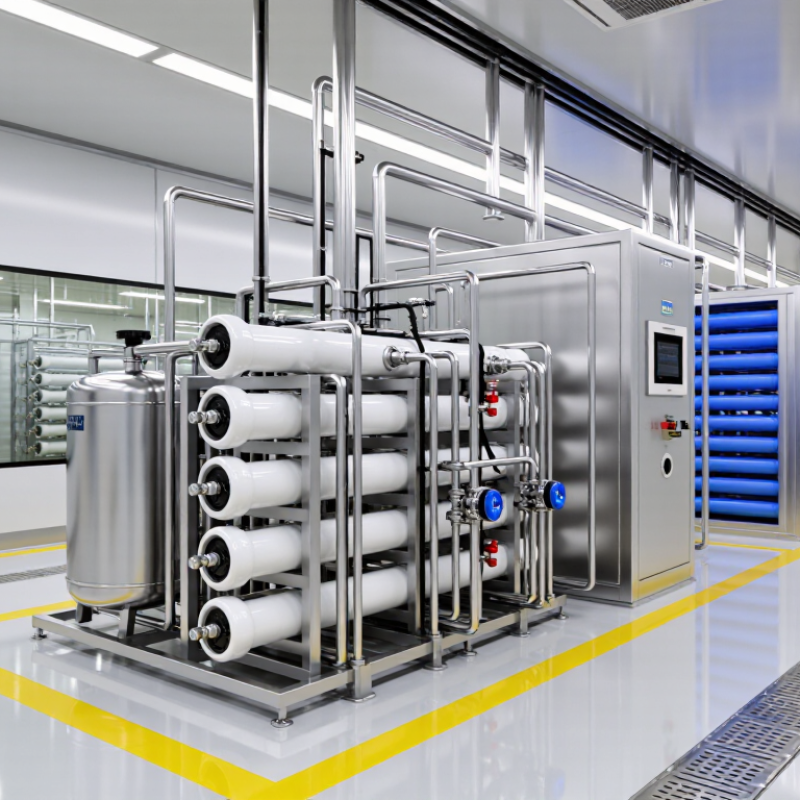
Ultrapure water equipment removes particles, ions, organic compounds, microbes, and dissolved gases. A typical system combines pretreatment, reverse osmosis, electrodeionization, ultraviolet oxidation, ultrafiltration, and final polishing. The goal is water approaching 18.2 megohm-centimeters at 25°C, with extremely low total organic carbon. ASTM D5127 provides guidance for electronic-grade water quality. Small contamination can damage wafer surfaces, alter chemical processes, or reduce laboratory accuracy. The water looks ordinary. Its chemistry is not.
Demand is increasing as chip production expands. SEMI’s 2024 World Fab Forecast projected 42 new semiconductor fabrication facilities and production lines starting operations during 2024. Each facility needs stable water quality and continuous monitoring. Manufacturers should therefore offer online resistivity, TOC, particle, and microbial monitoring. They should also document validation, calibration, alarm controls, and replacement intervals. A low purchase price means little if technicians cannot trace a quality failure.
Water recovery also deserves attention. The United Nations World Water Development Report 2024 states that agriculture accounts for roughly 70% of global freshwater withdrawals. Industrial users cannot ignore that pressure. Modern ultrapure water systems may recover more water through optimized reverse osmosis and concentrated-waste treatment. However, recovery claims need site-specific testing. I would question any supplier promising identical performance everywhere. Feedwater changes, temperature shifts, membrane fouling, and operator practices can change results. Experienced manufacturers explain those limits clearly and provide practical service records.
| Equipment or Evaluation Dimension | Primary Function | Typical Technical Data | Relevant Quality Indicator | Common Applications | Why It Matters When Selecting a Manufacturer |
|---|---|---|---|---|---|
| Pretreatment System | Removes suspended solids, chlorine, hardness, iron, and organic contaminants before advanced purification. | Multimedia filtration, activated carbon filtration, softening or antiscalant dosing; commonly designed for feed-water turbidity below approximately 1 NTU after pretreatment. | Stable inlet water quality and low fouling potential | Laboratories, pharmaceutical plants, electronics facilities, and industrial process water systems | A well-designed pretreatment stage protects membranes and extends the service life of downstream equipment. |
| Reverse Osmosis Unit | Uses a semipermeable membrane to reduce dissolved salts, microorganisms, particles, and many dissolved organic substances. | Typical single-pass permeate recovery is about 50%–80%, depending on feed-water quality and system design; salt rejection is commonly greater than 95% for a properly operated membrane system. | Permeate conductivity, recovery rate, and salt rejection | Production of purified water for laboratories, hospitals, and industrial water treatment | Manufacturers should provide membrane protection, pressure control, monitoring, and a clear cleaning procedure. |
| Electrodeionization (EDI) | Continuously removes ionic contaminants by combining ion-exchange resins, ion-selective membranes, and an electric field. | Normally installed after reverse osmosis; product-water resistivity can commonly reach approximately 10–18 MΩ·cm at 25°C when feed-water conditions are suitable. | Resistivity, silica leakage, and continuous operating stability | Pharmaceutical water systems, power generation, laboratories, and high-purity industrial processes | EDI performance depends strongly on RO quality, carbon dioxide control, silica levels, and correct hydraulic design. |
| Ion-Exchange Polishing | Removes residual cations and anions to achieve very low ionic contamination. | Mixed-bed polishing systems can produce water approaching 18.2 MΩ·cm at 25°C when properly regenerated or when disposable cartridges are used within capacity limits. | Resistivity and ionic breakthrough | Analytical laboratories, chromatography, trace-element analysis, and semiconductor-related processes | The supplier should specify resin type, capacity, replacement frequency, and disposal requirements. |
| Ultrafiltration | Reduces colloids, suspended particles, bacteria, and high-molecular-weight organic contaminants. | Membrane pore ratings are commonly in the approximate range of 0.01–0.1 micrometers, depending on the membrane design and application. | Particle reduction, microbial reduction, and membrane integrity | Final polishing, pharmaceutical water treatment, and protection of sensitive instruments | It is useful where particulate and microbial control are important, but it does not replace deionization for dissolved ions. |
| Ultraviolet Purification | Uses ultraviolet radiation to reduce microorganisms and, at selected wavelengths, help break down trace organic compounds. | Microbial-control systems commonly use germicidal UV-C near 254 nm; oxidation systems may combine shorter-wavelength UV with chemical oxidants. | UV intensity, lamp operating hours, and microbial control | Laboratory water loops, pharmaceutical systems, and low-bioburden process-water applications | Effective performance requires adequate UV intensity, suitable flow velocity, lamp monitoring, and regular sleeve cleaning. |
| Point-of-Use Final Filter | Provides final particle and microbial control immediately before water reaches the dispensing outlet or process. | Common final filtration ratings include 0.2 micrometers for microbial-retentive filtration, subject to validated operating conditions. | Filter integrity, differential pressure, and microbial performance | Cell culture, molecular biology, analytical chemistry, and sterile-process support | The equipment supplier should define filter replacement intervals and prevent dead legs or stagnant water zones. |
| Storage and Distribution Loop | Stores and circulates purified water while minimizing recontamination, stagnation, and biofilm formation. | Common design features include continuous recirculation, sanitary piping, controlled flow, hygienic tanks, and periodic sanitization. | Resistivity, TOC, microbial count, temperature, and loop velocity | Pharmaceutical manufacturing, hospitals, research facilities, and centralized laboratory water systems | Distribution design can determine water quality as much as the purification equipment itself. |
| Water Quality Monitoring | Provides continuous or periodic verification that the system meets the required water-quality specification. | Typical monitoring parameters include conductivity or resistivity, total organic carbon, temperature, pressure, flow, and differential pressure. | Data accuracy, calibration traceability, alarm response, and data logging | All ultrapure-water production and distribution systems | A reliable manufacturer should supply calibrated sensors, alarms, historical data records, and accessible maintenance information. |
| Ultrapure Water Quality Level | Defines the quality target required by the process, laboratory method, or industry standard. | Type 1 laboratory water is commonly associated with resistivity of 18.2 MΩ·cm at 25°C and very low organic and microbial contamination, subject to the applicable standard and system design. | Resistivity, TOC, particles, bacteria, and endotoxins where applicable | HPLC, ICP-MS, ion chromatography, molecular biology, and semiconductor processes | Selection should begin with the required water grade rather than with equipment capacity alone. |
| Capacity and Recovery | Determines whether the equipment can meet peak demand while using water and energy efficiently. | Capacity is commonly specified in liters per hour or liters per day; recovery depends on pretreatment, membrane configuration, reject-water management, and operating conditions. | Product flow, recovery percentage, reject-water volume, and peak-load performance | Small laboratories through continuous industrial production | Correct sizing prevents frequent low-flow operation, insufficient supply, excessive reject water, and premature component wear. |
| Validation and Compliance Support | Documents that the equipment is designed, installed, operated, and maintained according to the user's quality requirements. | May include design specifications, installation and operational qualification documents, calibration certificates, material certificates, manuals, and maintenance records. | Traceability, documentation completeness, and audit readiness | Pharmaceutical, medical, food, research, and regulated manufacturing environments | Strong documentation reduces commissioning risk and supports long-term compliance and process control. |
| Maintenance and Total Cost of Ownership | Covers consumables, membrane cleaning, sanitization, calibration, spare parts, labor, energy, and wastewater management. | Replacement intervals vary with feed-water quality, operating hours, water demand, pretreatment performance, and contamination load. | Annual operating cost, uptime, service response, and spare-parts availability | Every ultrapure-water installation | The most suitable manufacturer is not necessarily the one with the lowest purchase price, but the one offering dependable performance over the equipment life cycle. |